10-ways to stop sucking at improv
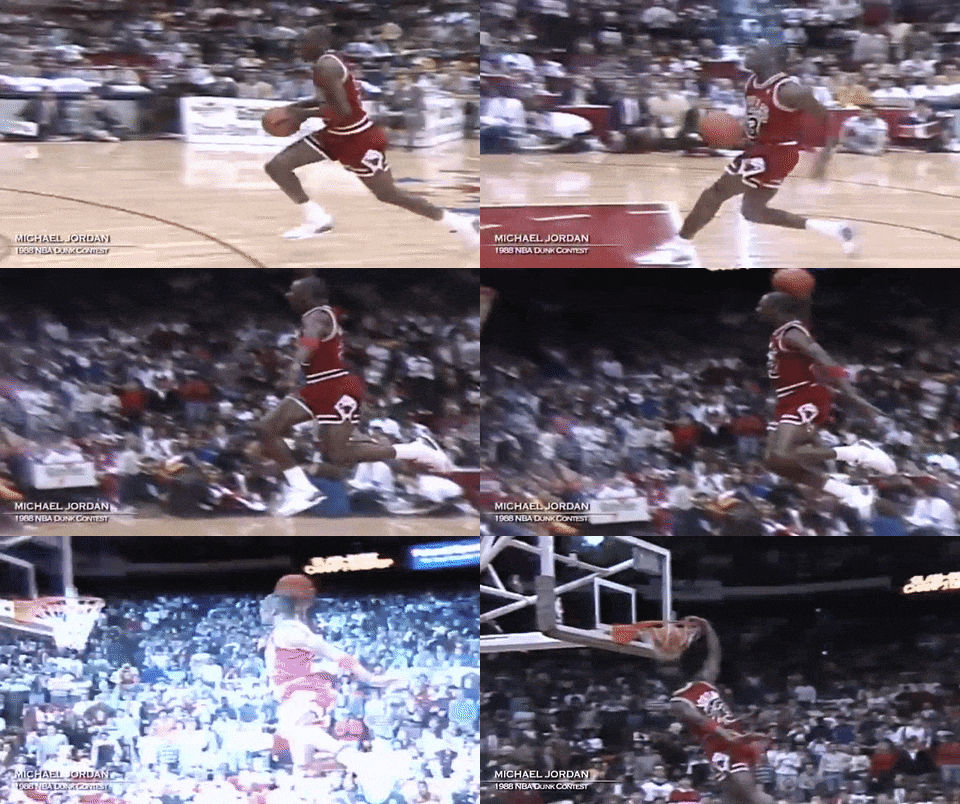
Would you rather learn basketball from Michael Jordan or Fred VanVleet? Assuming you even know who VanVleet is (shoutout Rockford), most people pick Jordan.
Most people are wrong.
At the highest level, people often don’t know why they’re great. Their instincts are unconscious, or their physical gifts are unteachable. Jordan himself said his brother was a more skilled player, but his brother wasn’t 6’6 with a 40-inch vertical. The poor little guy was 5’8. The other 5’4. Damn Genetics!
Improv works the same way.
You don’t want advice from the best. What works for them may not work for you and they often can’t explain it anyway. You want advice from someone who was bad and fought their way to vicious mediocrity.
That growth is teachable. That growth has tips, tricks, and hacks you can steal.
The best won’t give away their top stuff. Me? I don’t even have any. What I do have is 99% more experience with what makes improv shows work from my years as a technical director. I’ve watched nearly 2,000 live improv sets and I’ve seen what actually works, not just what works once.
Here’s what works.
Silence: Give yourself and your scene partner space at the start. You don’t need to rush into words.
Have Fun: Play creates play. Worry creates worry. The law of state transference: what you feel, they feel. The audience is a pack of wolves; they can smell hesitation.
Don’t Solve the Problem: The problem is the scene.
Listen: Listen like a thief. The details are your clues.
Choose & Commit: Make a strong choice (posture, voice, accent, POV, object) and commit fully. Explore the choice, don’t maintain it.
You: Play your version of the scene. It’s just as valid as anyone else’s.
Endowment: If your choice changes what your partner is doing (i.e push-ups endowed as method of flying plane), it’s too heavy-handed. If it hightens it, it’s a gift.
Walk-On: The key to a good walk-on is the walk-off. Enter with purpose. No lingering.
Object Work: If there’s an object, endow it with meaning. A cup is just a cup or is it your mother’s favorite cup filled with stale black coffee.
Stage Picture: Don’t hide upstage. Step forward. Expose yourself (emotionally, not literally). Move. If they wanted static talking heads, they’d go to stand-up or a bar.
Bonus – Don’t Stretch: It never works as a scene in itself. I don’t know why, but people do it anyway. Hardly does anyone know why they are stretching, it just gives them something to do.
